

Bullfrog Architecture

Our solution is an end-to-end inspection system for composite materials manufacturing. From automated scanning through to decision support.
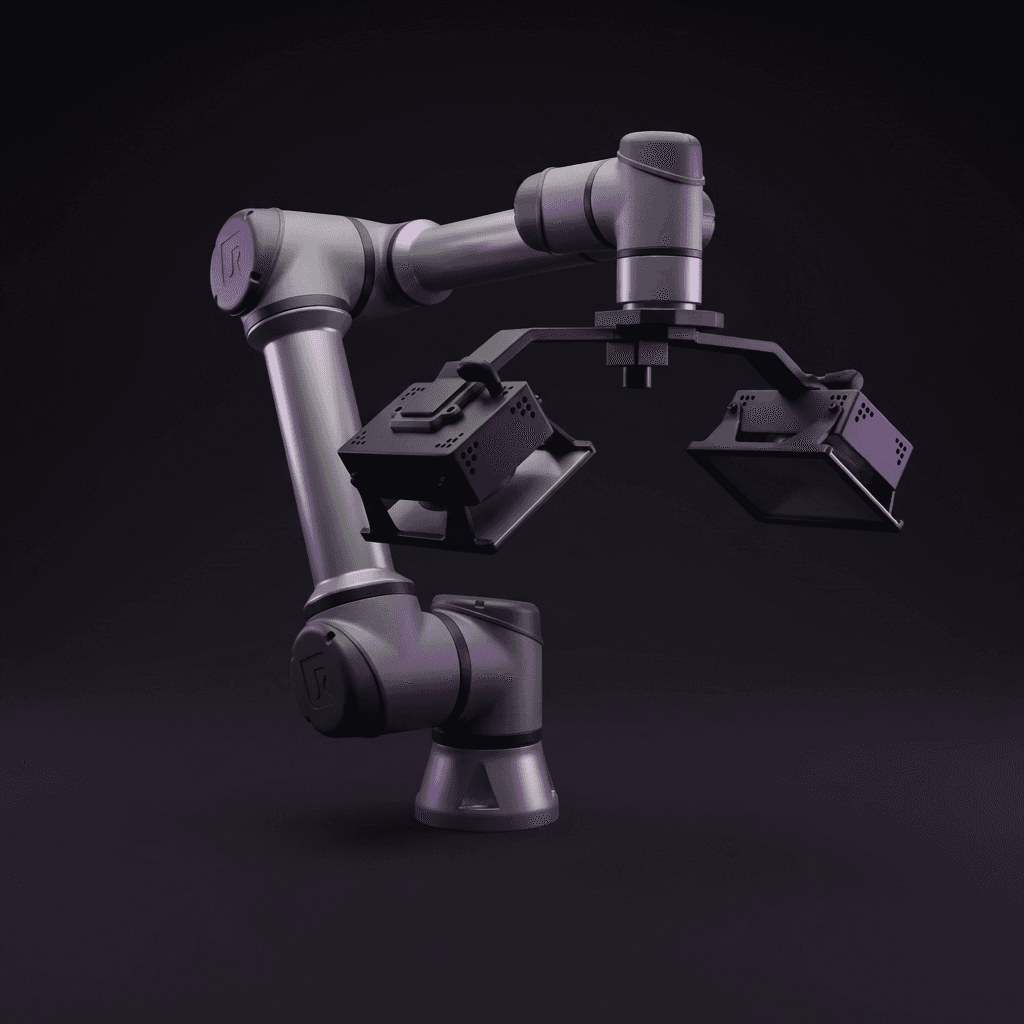
Scan
Automated thermal excitation and infrared data capture, integrated directly into the production line. Non-contact, fast, and adaptable to complex part geometries.
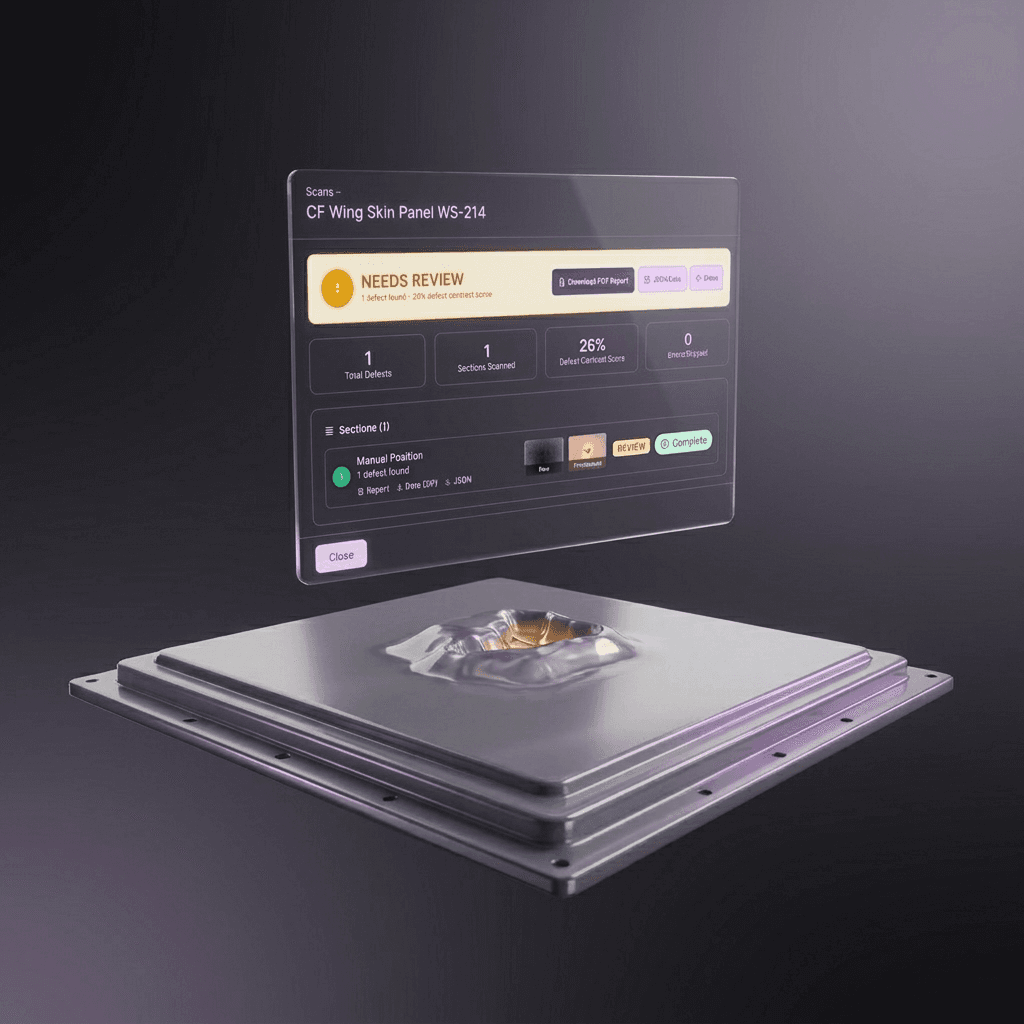
Lilypad
Lilypad is our software platform. It uses advanced signal processing and AI algorithms to automatically detect and classify subsurface defects from thermal imaging data. It categorises defects by type, size, and location to build a complete defect map for every part inspected
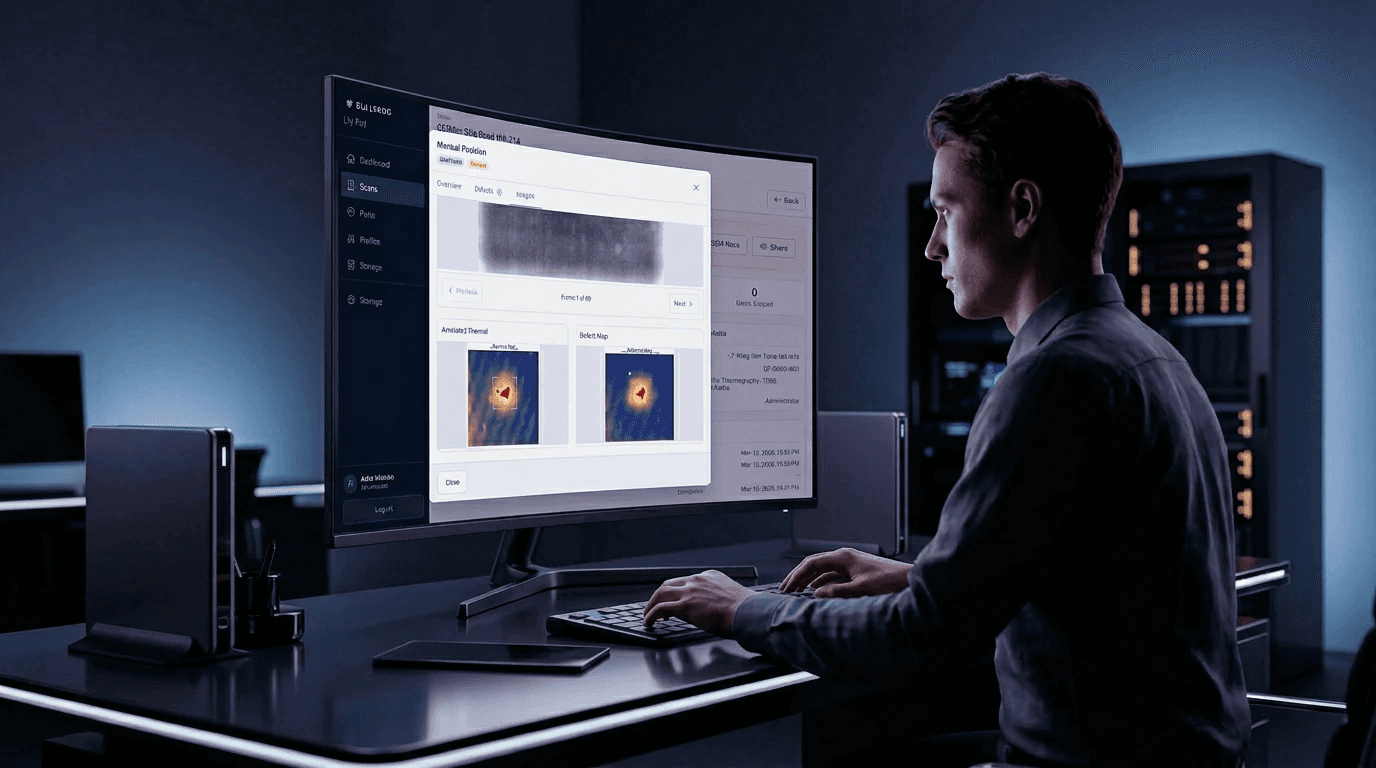
Decision support for specialists
Go/no-go and review recommendations delivered at the point of inspection.
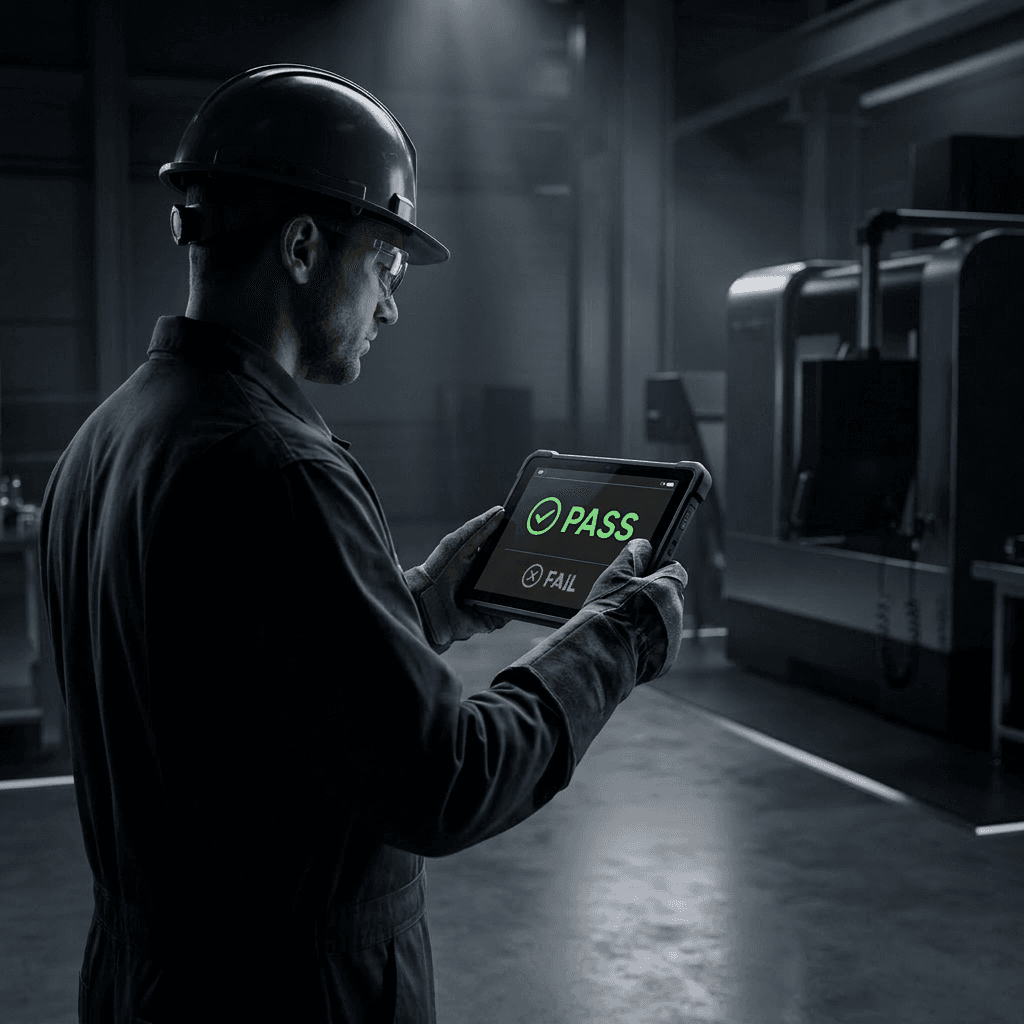
Decision support for operatives
Go/No-go and review recommendations delivered at the point of inspection, feeding directly into quality management systems so ground floor engineers get actionable decisions rather than raw thermal images to interpret.
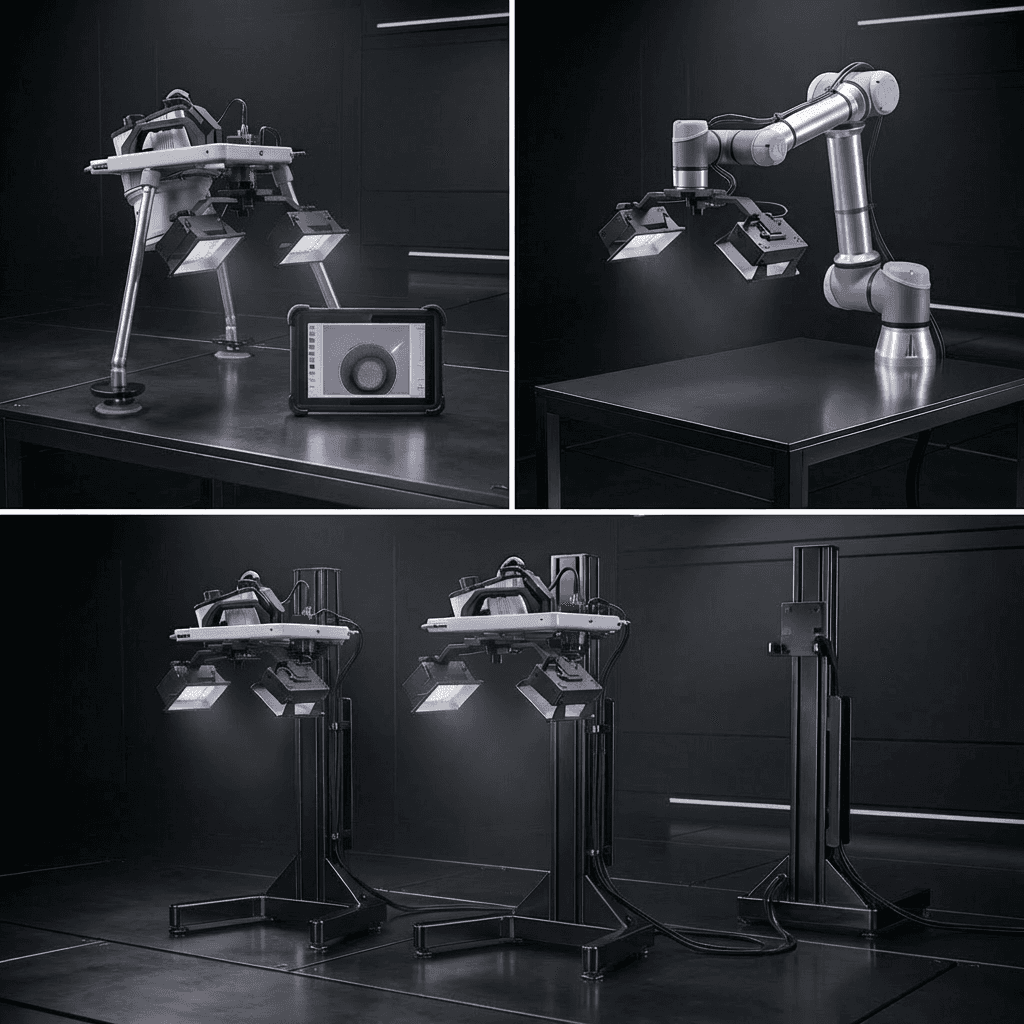
Flexible deployment
Whether handheld, fixed-mount, or robot-arm integrated, Bullfrog fits your production environment. One platform, multiple deployment methods.
Where Bullfrog Works
We designed Bullfrog to sit where manufacturers gain the most value. From speaking to multiple manufacturers, we've found that moving inspection as close to in-process as possible delivers the best results across all variations of composite manufacturing.
Benefits
Break the inspection bottleneck
Fully automated inspections at production-line speed. No manual probe positioning, no coupling agents, no waiting. NDT stops being the constraint on your throughput.
Free your specialists
Automated defect identification, characterisation, and localisation mean that your NDT engineers spend their time on judgment calls not routine scanning and interpretation.

Actionable data, not raw images
Automated categorisation and next-steps decision support. Every inspection produces a clear accept/reject/review output accompanied with a report, not a thermal image that needs expert interpretation.
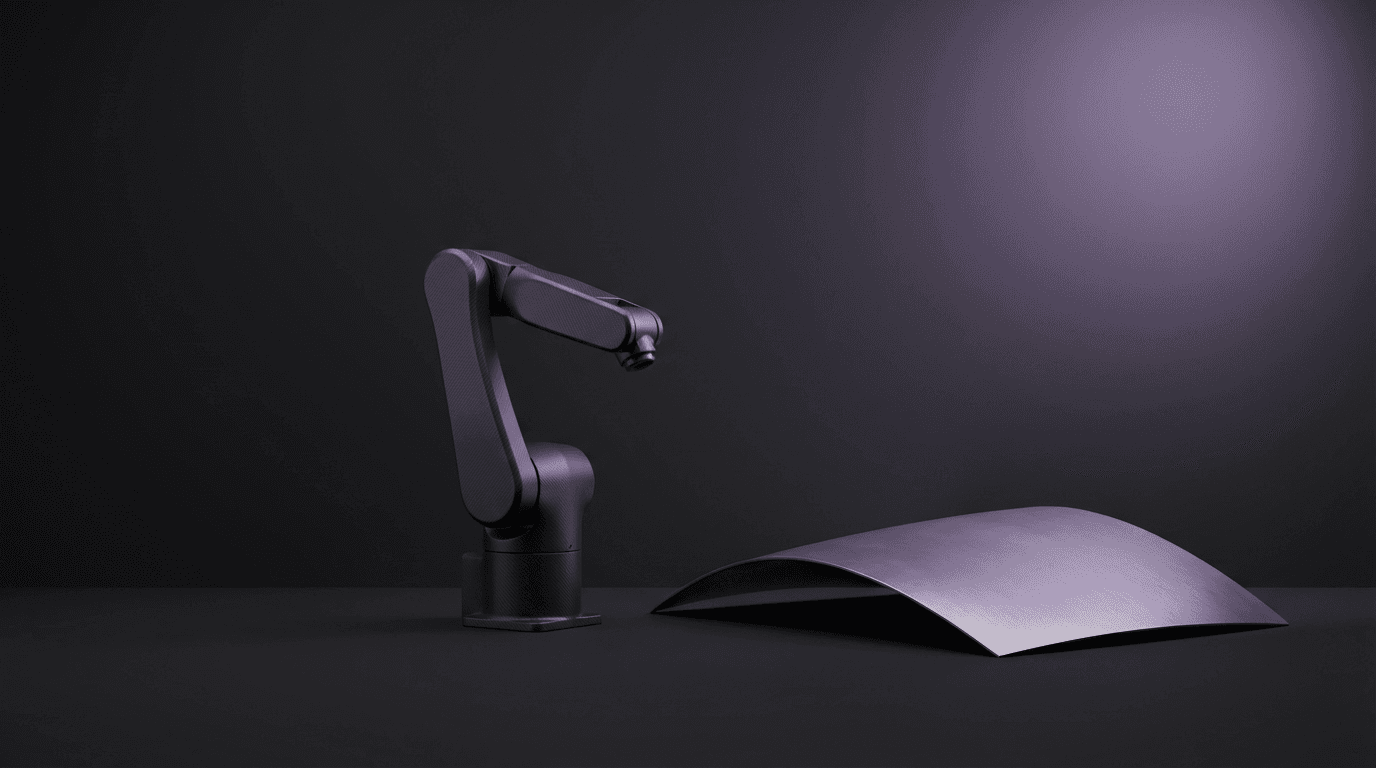
Fits your existing lines
Designed for integration into current manufacturing workflows without disruption. Modular hardware and flexible mounting options mean Bullfrog adapts to your process, not the other way around.
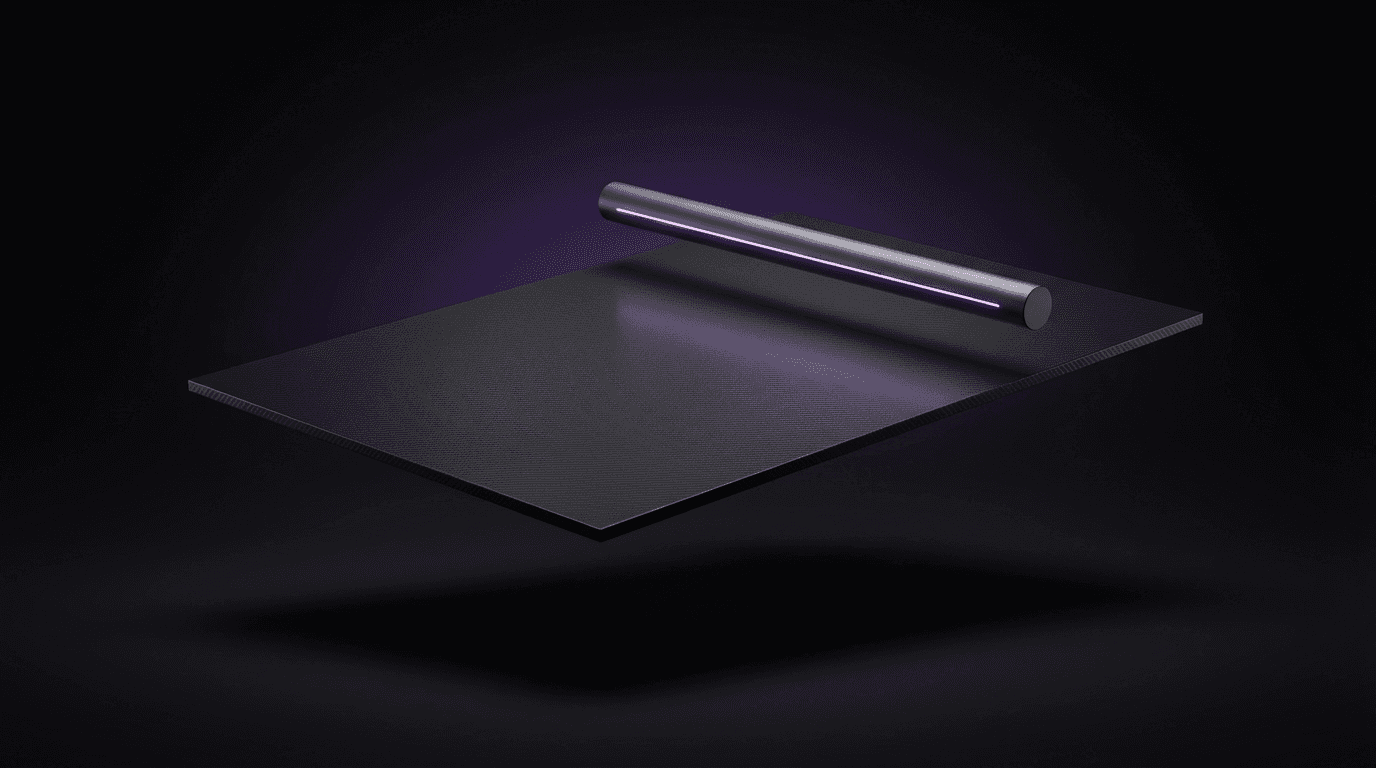
Affordable enough to inspect everything
The Bullfrog system makes it economically viable to conduct NDT at multiple points in your process, on every component produced not just on a sample basis or at the end of the line.
Active Thermography
Explainer
A brief thermal stimulus is applied to the surface of a component. As the heat diffuses through the material, subsurface features such as voids, delamination, and porosity cause measurable variations in the surface temperature profile. Our system captures and analyses these thermal signatures in real time.
Read our full explainer: What Is Active Thermography?
Most aerospace
composite parts
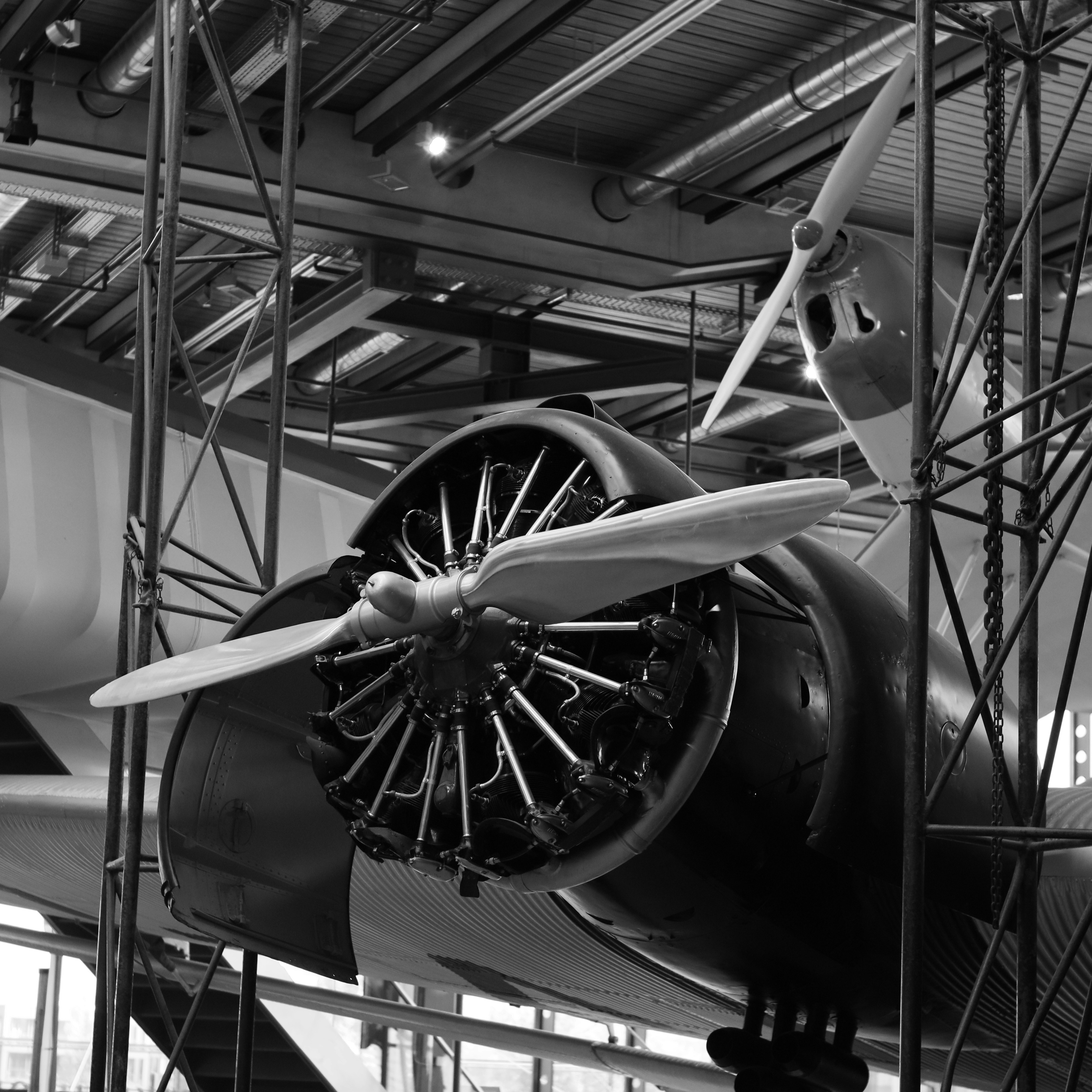
Over 80% of aerospace composite components are under 7mm thick which is within active thermography’s effective range. Bullfrog handles complex geometries by adapting inspection parameters to each part’s specific profile.
In-process inspection
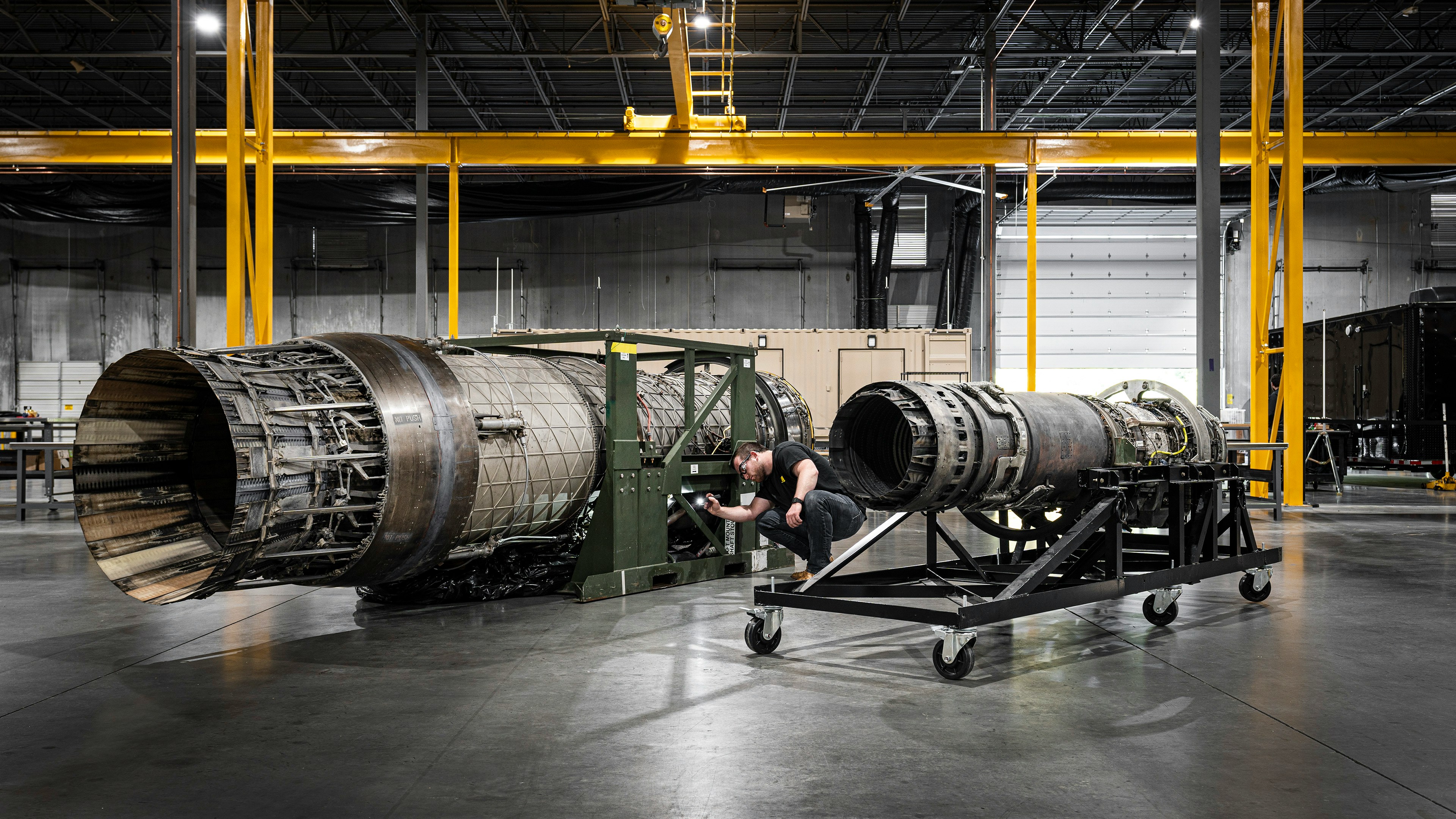
Bullfrog targets two key points in the production line: pre-cure, before the part enters the autoclave, and post-cure, before machining and finishing begin. Both windows share the same principle: the part has not yet reached its full finished value, meaning defects can still be acted on without writing off the total cost of production. The earlier a defect is found, the cheaper it is to fix.

